From: civilwartalk.com

Some data on sinks in the Civil War that I collected, without doing a precise study.
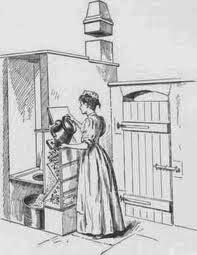
Sinks in the Civil War are what we would call latrines. It probably is more afield than what the normal Civil War student studies, but it sure killed a lot of soldiers. Sometimes the captured prisoner contributed to his own bad health by undisiplined use of sinks, and was not entirely due to the prison system.
As a result of both historical documentation and field research, the prison stockade, Fort Johnson, the remains of Fort Hill, and the dock have been located. Archaeological excavations have been carried out in several sinks (latrines) dating from 1862 to 1865, a prison well, the powder magazine from Fort Hill, and portions of two prison blocks
HEADQUARTERS ARMY OF THE POTOMAC,
Near Cold Harbor, Va., June 5,1864.
Major-General MEADE, U. S. Volunteers,
Commanding Army of the Potomac:
... Very few regiments provided sinks for the men, and
their excreta are deposited upon hill sides to be washed from thence into the streams, thus furnishing an additional source bf contamination to the water. As is to be expected, under such circumstances, sickness is increasing in the army, diar-rhea being especially prevalent...
THS. A. McPARLIN,
Surgeon U. S. Army, Medical Director, Army of the Potomac.
In fact, no attention seemed to be paid to cleaning up the grounds immediately in and about the hospital, nor was proper atten-tion bestowed upon the sinks. The ground between the hospital and the sinks had been used for uncleanly purposes by the patients, mak-ing it offensive to the sight as well as the smell.
H. B. PEYTON,
Lieutenant- Colonel, Assistant Adjutant and Inspector General.
OFFICE COMMISSARY-GENERAL OF PRISONERS,
July 1, 1862.
General M. C. MEIGS,
Quartermaster-General U. S. Army, Washington, D.C.
...The camp is in a very foul condition from want of drainage, and this can only be remedied by construction of a sewer sufficiently below the surface to guard against frost around the sides of the camp and leading into the lake. With this must be connected water pipes to furnish an abundant supply of water for the use of the camp and to float out the filth of all kinds through the sewer.
The sinks should be connected with the sewers so that during the summer the camp and neighborhood would be relieved from the stench which now pollutes the air.
The cost of erecting new barracks and repairing the old ones will be $5,000 to $8,000 and for introducing the system of pipes and drainage about as much more.
If a suitable camp-ground could be found and there was yet time for the work it would perhaps be best to abandon Camp Douglas, but there seems now no alternative but to make the best of what we have.
I have ordered a thorough system of police to be put in force at once, but your immediate attention is earnestly called to the matter of the above report.
The hot weather of summer is just upon us and if something is not done speedily there must be much sickness in the camp and neighbor-hood if not a pestilence.
Very respectfully, your obedient servant,
W. HOFFMAN,
Colonel Third Infantry, Commissary- General of Prisoners
WASHINGTON, November 13, 1863.
Dr. J. H. DOUGLAS,
Associate Secretary, Sanitary Commission:
SIR: In compliance with orders received from the central office to proceed to Point Lookout, Md., and inquire into the condition, &c., of the rebel prisoners there confined, also the sanitary condition of the encampment and its inmates, I hereby submit the following report:
It is within this that there are confined about 8,000 pris-oners. With so many men and no one to take charge of them, it is not at all to be wondered at that the camp is in any but a desirable condition. The sinks, which should have special consideration, especially in a camp of this size, and where so many men are congregated, are entirely neglected, and it is a perfect mystery that there is not more sickness than they have, and God knows they have enough, for they live, eat, and sleep in their own filth. Sinks have been prepared for them, but little or no attention is paid to them, unless they should be in close proximity when they desire to answer the calls of nature. The holes dug in getting out clay for bricks are used as sinks. You will find them by the side and in front of their tents, in various portions of the encampment, and are the receptacles of their filth. Refuse matter from the tents or what not right under their very noses, yet they heed them not. Others, again, have no particular place, but will void their excrement anywhere on the surface that is most convenient to them, heedless of the convenience of others. Have no drainage around the tents, but there has been an attempt to drain the streets. Ditches were dug, but they are worse than useless, constantly filled with water, and afford another place to throw filth. With this state of affairs and so many men (by the by, over 1,300 more came in the camp on the afternoon of November 10, making nearly 10,000 men) the camp would soon become in an impassable condition. The men themselves complain and hope that some severe punishment, even shooting, will be the penalty to any one who will so outrage decency and lose respect due themselves. Some of the sinks are filled and not been covered and not a particle of chloride of lime has been used in the encampment for a long time. After stating the above facts, giving the condition of the camp arid its inmates, some might say that it is not our fault that they are in this condition. As far as clothing, it is not; but it is our fault when they neglect to enforce those sanitary rules which keep camps and inmates in a cleanly condition and thus try to prevent disease. It is our fault when the officer in command fails to place in charge some one of good executive ability, capable of giving commands and seeing that they are enforced, one who will have the camp regularly policed amid severely punish any offender of the sanitary rules. It is beneficial otherwise, for it will give employment to a certain number of men every (lay. As regards medicine and clothing, they are sadly in want of both and would suggest that the commission send them, place them in the hand of Mr. Fairchild, and I know they will be judiciously distributed.
I know that they are our enemies, and bitter ones, and what we give them they will use against us, but now they are within our power and are suffering. Have no doubt that to compare their situation with that of our men words would hardly be adequate to express our indignation.
I merely gave this suggestion because I think you would be doing right and that it might prove beneficial to us.
Very respectfully, your obedient servant,
W. F. SWALM.

Some data on sinks in the Civil War that I collected, without doing a precise study.
Sinks in the Civil War are what we would call latrines. It probably is more afield than what the normal Civil War student studies, but it sure killed a lot of soldiers. Sometimes the captured prisoner contributed to his own bad health by undisiplined use of sinks, and was not entirely due to the prison system.
As a result of both historical documentation and field research, the prison stockade, Fort Johnson, the remains of Fort Hill, and the dock have been located. Archaeological excavations have been carried out in several sinks (latrines) dating from 1862 to 1865, a prison well, the powder magazine from Fort Hill, and portions of two prison blocks
HEADQUARTERS ARMY OF THE POTOMAC,
Near Cold Harbor, Va., June 5,1864.
Major-General MEADE, U. S. Volunteers,
Commanding Army of the Potomac:
... Very few regiments provided sinks for the men, and
their excreta are deposited upon hill sides to be washed from thence into the streams, thus furnishing an additional source bf contamination to the water. As is to be expected, under such circumstances, sickness is increasing in the army, diar-rhea being especially prevalent...
THS. A. McPARLIN,
Surgeon U. S. Army, Medical Director, Army of the Potomac.
In fact, no attention seemed to be paid to cleaning up the grounds immediately in and about the hospital, nor was proper atten-tion bestowed upon the sinks. The ground between the hospital and the sinks had been used for uncleanly purposes by the patients, mak-ing it offensive to the sight as well as the smell.
H. B. PEYTON,
Lieutenant- Colonel, Assistant Adjutant and Inspector General.
OFFICE COMMISSARY-GENERAL OF PRISONERS,
July 1, 1862.
General M. C. MEIGS,
Quartermaster-General U. S. Army, Washington, D.C.
...The camp is in a very foul condition from want of drainage, and this can only be remedied by construction of a sewer sufficiently below the surface to guard against frost around the sides of the camp and leading into the lake. With this must be connected water pipes to furnish an abundant supply of water for the use of the camp and to float out the filth of all kinds through the sewer.
The sinks should be connected with the sewers so that during the summer the camp and neighborhood would be relieved from the stench which now pollutes the air.
The cost of erecting new barracks and repairing the old ones will be $5,000 to $8,000 and for introducing the system of pipes and drainage about as much more.
If a suitable camp-ground could be found and there was yet time for the work it would perhaps be best to abandon Camp Douglas, but there seems now no alternative but to make the best of what we have.
I have ordered a thorough system of police to be put in force at once, but your immediate attention is earnestly called to the matter of the above report.
The hot weather of summer is just upon us and if something is not done speedily there must be much sickness in the camp and neighbor-hood if not a pestilence.
Very respectfully, your obedient servant,
W. HOFFMAN,
Colonel Third Infantry, Commissary- General of Prisoners
WASHINGTON, November 13, 1863.
Dr. J. H. DOUGLAS,
Associate Secretary, Sanitary Commission:
SIR: In compliance with orders received from the central office to proceed to Point Lookout, Md., and inquire into the condition, &c., of the rebel prisoners there confined, also the sanitary condition of the encampment and its inmates, I hereby submit the following report:
It is within this that there are confined about 8,000 pris-oners. With so many men and no one to take charge of them, it is not at all to be wondered at that the camp is in any but a desirable condition. The sinks, which should have special consideration, especially in a camp of this size, and where so many men are congregated, are entirely neglected, and it is a perfect mystery that there is not more sickness than they have, and God knows they have enough, for they live, eat, and sleep in their own filth. Sinks have been prepared for them, but little or no attention is paid to them, unless they should be in close proximity when they desire to answer the calls of nature. The holes dug in getting out clay for bricks are used as sinks. You will find them by the side and in front of their tents, in various portions of the encampment, and are the receptacles of their filth. Refuse matter from the tents or what not right under their very noses, yet they heed them not. Others, again, have no particular place, but will void their excrement anywhere on the surface that is most convenient to them, heedless of the convenience of others. Have no drainage around the tents, but there has been an attempt to drain the streets. Ditches were dug, but they are worse than useless, constantly filled with water, and afford another place to throw filth. With this state of affairs and so many men (by the by, over 1,300 more came in the camp on the afternoon of November 10, making nearly 10,000 men) the camp would soon become in an impassable condition. The men themselves complain and hope that some severe punishment, even shooting, will be the penalty to any one who will so outrage decency and lose respect due themselves. Some of the sinks are filled and not been covered and not a particle of chloride of lime has been used in the encampment for a long time. After stating the above facts, giving the condition of the camp arid its inmates, some might say that it is not our fault that they are in this condition. As far as clothing, it is not; but it is our fault when they neglect to enforce those sanitary rules which keep camps and inmates in a cleanly condition and thus try to prevent disease. It is our fault when the officer in command fails to place in charge some one of good executive ability, capable of giving commands and seeing that they are enforced, one who will have the camp regularly policed amid severely punish any offender of the sanitary rules. It is beneficial otherwise, for it will give employment to a certain number of men every (lay. As regards medicine and clothing, they are sadly in want of both and would suggest that the commission send them, place them in the hand of Mr. Fairchild, and I know they will be judiciously distributed.
I know that they are our enemies, and bitter ones, and what we give them they will use against us, but now they are within our power and are suffering. Have no doubt that to compare their situation with that of our men words would hardly be adequate to express our indignation.
I merely gave this suggestion because I think you would be doing right and that it might prove beneficial to us.
Very respectfully, your obedient servant,
W. F. SWALM.