Civil War Hospital Ship

The U.S.S. Red Rover, a captured Confederate vessel, was refitted as a hospital ship.

Evolution of Civil War Nursing

The evolution of the nursing profession in America was accelerated by the Civil War.

The Practice of Surgery

Amputations were the most common surgery performed during the Civil War.

Army Medical Museum and Library

Surgeon-General William Hammond established The Army Medical Museum in 1862. It was the first federal medical research facility.

Civil War Amputation Kit

Many Civil War surgical instruments had handles of bone, wood or ivory. They were never sterilized.

Sunday, March 9, 2014

Malaria

From: comestepbackintime.wordpress.com

Between 1861 and 1866 over 1 million Union soldiers  were diagnosed with malaria.  Malaria is a parasite transmitted by the Anopheles mosquitoes.   The mosquito breeds in stagnant, sunlit pools of fresh water and the adult female requires a blood meal in order to be able to ovulate and lays somewhere between 100-300 eggs at any one time.  Symptoms of the disease are chills, shakes, nausea, headache, an enlarged spleen and most notably, a fever that spikes every 1 to 3 days depending on the type of malaria and its parasitic cycle.  There are 4 species of malarial parasite that commonly infect humans:

Plasmodium falciparum -  Common type that was found in the United States during The American Civil War. Results in a congestive and malignant fever.  A pernicious malaria which left untreated is fatal;
Plasmodium Vivax – not often fatal and commonly referred to as an “intermittent fever”;
Plasmodium Malariae;
Plasmodium Ovale.
Malaria is categorised according to how often the fever spikes or paroxysms occur:

quotidian fever – every 24 hours;
tertian fever – every 48 hours;
quartan fever - every 72 hours.

The further south you traveled, the more prevalent malaria was.  The South’s “Sickly Season”, as it was referred to, took place during the months of summer and autumn.  The impact of malaria upon military campaigns in The American Civil War cannot be underestimated.  Examining the causal links between human health in general and developments in military history is extremely complex and lies outside the confines of this blog.  But there is no doubt that military operations are affected by epidemics and seasonal outbreaks.  For example, when the “Sickly Season” was in full swing, major offensives were less likely to be initiated by the Union army in certain areas of the Confederacy.

The treatment options available in 1860s America were pretty good. Quinine, which occurs naturally in the bark of the cinchona tree, was the most effective in controlling symptoms of the disease.  The cinchona bark was known for its febrifugal properties and continued to be used in anti-malarial drugs until the 1940s. The Pilulae Quinlae Sulphatis treatment was standard issue in the Army Surgeon’s medicine chest.  The recommended dosage would be 3 grams of Sulphate of Quinia.  A fatal dose of quinine is 8 grams and many soldiers were given high doses of the drug.  Side effects of overdosing included ringing in the ears, headaches, nausea and blurred vision.  There were two large pharmaceutical companies whose headquarters were in Philadelphia,  Rosengarten & Sons and Powers & Weightman both of whom cornered the market in quinine based medications.

Union blockades meant stock piles of quinine in the South dwindled with each year of the war.  When quinine supplies did sometimes get through the blockade, Confederate soldiers hijacked it for themselves, leaving many civilians to suffer, untreated, the disease’s terrible side effects.  Quinine was also used to treat gout and dyspepsia.  Quinine substitutes were created by the Southerners to try to counter the shortages.  Constituents of these preparations included 30% dogwood bark, an equal portion of poplar bark, 40% willow bark all mixed with whiskey.  Alternative remedies were also tried by the desperate civilian.  Some believed that rubbing turpentine on the stomach prevented paroxysms and others tried putting red pepper in their tea.  All substitutes proved  ineffective.   Throughout the War, travel restrictions were in place in the South which meant that white Southerners, who would have normally fled their plantations during “Sickly Season”,  had to stay put and face the ravages of the disease.

Union Surgeons issued more than 19 tons of quinine throughout the War. The daily ‘quinine call’ queues were a familiar sight in Union encampments. Soldiers taking part in The Siege of Vicksburg (18th May – 4th July 1863) exploded powder cartridges in their tents to smoke-out the mosquitoes. Many soldiers were most vulnerable from being attacked by Anopheles mosquitoes whilst performing picket duty.

Image: Pilulae Quinlae Sulphatis used for treating malaria.

From: comestepbackintime.wordpress.com

Dr. Albert Freeman Africanus King


Albert Freeman Africanus King (born 1841; died 1914) was a bystander physician who was pressed into service during the assassination of Abraham Lincoln. In addition, King was one of the earliest to suggest the connection between mosquitos and malaria.

On January 18, 1841, King was born in Ambrosden, near Bicester, a village in the Cherwell District of north-eastern Oxfordshire in England. His father was a doctor interested in the colonization of Africa. He was named Africanus "because of his father's admiration" for that continent. King was ten when his family emigrated from the United Kingdom to the United States.

King was a degreed Doctor of Medicine (MD). He attended both the Columbia Medical College (now George Washington University Medical School) and the University of Pennsylvania. In 1861, he graduated from Columbia at age twenty. In 1865, he graduated from Pennsylvania at the age of twenty-four.

During the American Civil War, King was in Washington, DC, and in the audience at Ford's Theatre when Lincoln was shot by John Wilkes Booth. Some suggest King was the first physician to reach Lincoln. But the accounts of the other physicians present, Dr. Charles Augustus Leale and Dr. Charles Sabin Taft, suggest that King was second or third.

King later became a professor of obstetrics in Washington, DC and at the University of Vermont.

In 1882, King proposed a method to eradicate malaria from Washington, DC. His method was to encircle the city with a wire screen as high as the Washington Monument. Many people took this as a jest, partly because the link between malaria and mosquitoes had, at that time, been hypothesized by only a few physicians. It was not until 1898 that Ronald Ross proved mosquitoes were a vector for malaria (he won the Nobel Prize for the discovery just four years later). However impractical, King was on the right track for malaria control, well in advance of the rest of the medical profession.

From: wikipedia.org

Consumption and Typhoid Fever

By Gordon Chaney

Of the many diseases that killed fighting men in the Civil War few killed as many men as Typhoid Fever and Tuberculosis. These diseases were some of the most deadly to ever hit the soldiers and constituted many deaths on both the Union and Confederate sides.

Typhoid fever is a disease that is characterized by diarrhea and a rash with many other symptoms ranging from severe headache to delirium. It is caused by the bacteria Salmonella tyhpi. This bacteria is spread by food or drink that is contaminated with fecal matter, cooks with this disease readily pass this disease onto others. After the bacteria is ingested it travels to the spleen to multiply. Then the disease manifests as a fever and diarrhea which can lead to dehydration.

Typhoid fever was grouped collectively of disease called Camp Fever. During the years of the war itself Union records show that almost 30,000 soldiers died from this particular disease. The squalid conditions of many camps as well as lack of understanding about bacteria and disease transmission lead to this high number of deaths. Fecal matter as well as dead bodies contaminated streams causing the disease to spread.

Treatment of the day consisted of the few trained doctors giving a mixture of mercury and chalk to the afflicted. America at the time lacked the proper medical professionals to handle such a large scale war. Also used were opium, morphine and quinine to treat the diseased.

Tuberculosis was often colloquially known as Consumption, or phthsis, which describes the wasting condition of many patients. An estimated 13,000 died of this disease during the course of the war but many others were sent home to waste away. The usual treatment of sending the patient to sanitariums could not be accomplished due to combat. Usual treatments during the Civil War period including sending patients away for 'fresh' air or during their sanitarium stay having a surgery to decrease lung capacity. But as mentioned early these procedures proved to be ineffective and often times patients were just sent home to die.

Diseases during the Civil War caused a revolution to the teaching of medicine in America. Before the war many medically professionals had just apprenticed under a doctor or at best two years of medical training. During the war itself Surgeons from Vermont and Ohio were know to have been trained well but few others had this reputation. After the war the need for medical schools was proven and the thus began a new era of medicine in the United States.

From: voices.yahoo.com


Tuesday, March 4, 2014

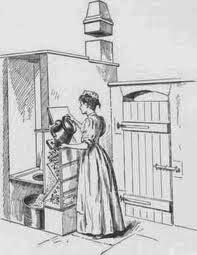
Latrines and Water Closets

By Glenna R. Schroeder-Lein

A number of hospitals had indoor water closets of some sort. They night have a rudimentary flush mechanism activated by pulling the chain to a cistern. The water carried the waste directly into a sewer, but there was nothing to keep noxious odors and gases from coming back up into the water closet. A hospital in Central Park in New York City had water closets on all the floors, but the building was so tall that the pressure was insufficient to get water for flushing to the upper floors.

Some hospitals had toilets that had to be flushed by using a bucket of water. Since that water usually had to be hauled from a distance, the facilities were not flushed as often as they should have been. Another variety, especially popular in Philadelphia hospitals, was a long, slightly slanted zinc trough. The trough had a cover with a number of seat holes. At the upper end was a faucet that could be turned on to flush the waste down a sewer hole at the other end. Ideally the water was always on to keep the trough clean, but, practically, this used too much water, so waste and odor accumulated between periodic flushes.

An indoor latrine did little good if the soldiers did not know how to use it. the patients at the Gordon Hospital in Nashville, Tennessee, in November 1861 used the water closets like a trash can, throwing in paper, sticks, cloth, and other rubbish. Not surprisingly, the drainpipes plugged up and filthy sewage overflowed the hospital to such an extent that the patients had to be moved out and the hospital closet and thoroughly cleaned.

The efforts of the U.S. Sanitary Commission in the Union army, as well as medical inspectors, surgeons, and army officers on both sides, led to considerable improvement in sanitation as the war progressed. It was evident that well-disciplined regiments, with properly prepared and used latrines, had much less sickness than unsanitary regiments.

From: The Encyclopedia of Civil War Medicine

Under the Influence: Marching Through the Opium Fog

by James Street, Jr.
From: 4thus.com

By the beginning of the civil war, there was probably some opium of some form in most household medicine cabinets. In The Plantation Mistress, a 1982 study of women's life in the antebellum south, author Catherine Clinton writes that she found home remedies, all containing opium, for many common illnesses. She observes,

”Laudanum was commonly used throughout the antebellum era, prescribed with unfortunate frequency for 'female complaints'.....contrary to the 20th Century image....., the late 19th Century profile indicates that addicts were disproportionately upper-class, Southern, white and female."

The women of the Jefferson Davis family, treated by a Dr., liberal in his dosages, became dangerously addicted."  Most people using opiates did not become addicted.

Confederate society figure Mary Chestnut, writing in her diary in Richmond, Virginia, during July 1861, told of her refusal to take laudanum, a tincture of opium mixed with alcohol and water. "I have no intention of drugging myself now." she asserted. "My head is addled enough as it stands, and my heart beats to jump out of my body at every sound." Later, in March 1865, Mrs. Chestnut was a refugee in Lincolnton, N.C. She was accidentally given an overdose of Dover's powder, a mixture of opium and ipecac. She slept for 2 days and nights. After her Dr. remarked that she was hard to kill, Mrs. Chestnut speculated,” Maybe I was saved by the adulteration so often complained of in Confederate medicine."

When called to the colors, whether Union or Confederate, doctors who used opiates liberally on civilian clients continued to use them liberally on their military patients. William H. Taylor was an assistant surgeon in the Confederate Army of Northern Virginia, an organization known for its rapid marches. After the war he wrote that he had simplified sick call on the march to one basic question: How are your bowels? If they were open, I administered a plug of opium; if they were shut I gave them a plug of blue mass (an unstable mercury compound)." A Federal surgeon devised an even speedier sick call method. He performed diagnosis from horseback, dispensing morphine powder by pouring it into his hand and letting the patient lick it.

Morphine, injected by the recently developed hypodermic syringe, was the preferred form of opium for treating the wounded. And though syringes were scarce, even in the better-equipped Federal armies, 29,828 ounces of morphine sulphate was dispensed to Union soldiers. That figure seems almost trifling compared to the almost 10 million opium pills and 2,841 million ounces of other opiates administered by Federal medical authorities by 1865. While not as ubiquitous in the Confederate army, opium was in reasonable supply until the very end of the war, thanks to captured medical stores and imports smuggled through the naval blockade of the southern ports. Though opiates were used profusely in the treatment of illnesses, it was in relieving the pain of wounds and surgery that they were most effective. The desire for that relief cause many injured soldiers to become opiate addicts, for pain lingered long after medical treatment in those days. And after the war it was easy to find veterans who suffered agony from war wounds or war-related illnesses for the rest of their lives. In his book, "Dark Paradise: Opiate addiction in America Before 1940", David Courtwright quotes from an 1868 study titled The Opium Habit, with suggestions as to the remedy: "Maimed and shattered survivors from a hundred battlefields, diseased and disabled soldiers released from hostile prisons, anguished and hopeless wives and mothers, made so by the slaughter of those dearest to them, have found, many of them, temporary relief from their sufferings in opium."

Just as the Civil War army surgeon was a ready source of alcohol for non-medicinal purposes, so was he or his staff a handy source of opiates--not just for sneaky scroungers but for high-ranking officers too. If a general wanted opium pills, what surgeon would deny him the relief he sought, when the surgeon probably prescribed them in the first place? A surgeon had only to turn to his medicine chest to satisfy such a request, or the officer could help himself from the open stock usually arrayed on shelves in the unit's medical quarters.

Dr. Charles Beneulyn Johnson, a Union regimental medical steward, described the contents of the medical chests. "During a campaign our stocks of medicines were necessarily limited to standard remedies." He recalled, among which could be named opium, morphine, Dover's powder, quinine, rhubarb, Rochelle Salts, Epsom salts, castor oil, sugar of lead, tannin, sulphate of copper, sulphate of zinc, camphor, tincture of iron, tincture of opium, camphorate, syrup of squills, simple syrup, alcohol, whiskey, brandy, port wine, sherry wine etc. Upon going into camp, where we were likely to remain a few days, these articles were unpacked and put on temporary shelves made from box lids; on the other hand, when marching orders came, the medicines were again packed in boxes, the bottles protected by old papers, etc." Johnson continued, "Practically all the medicines were in powder form or in the liquid state. Tablets were not yet come into use and pills were very far from being as plentiful as they are today...." The doctor noted, "....one of the very few pills we carried in stock...was composed of two grains of camphor and one of opium. Asafetida, valerian and opium and its derivatives (sic) were about all (we) had to relieve nervousness and induce sleep."

Among the aphorisms attributed to that barely literate but extraordinarily effective Confederate, Lieutenant General Nathan Bedford Forrest, is one that states, "War means fighting and fighting means killing." Not all civil war generals could muster so direct such an approach to war and violence. Many preferred to try any means of defeating an enemy except fighting. These were usually the same generals who could not overcome their troops' natural desire to remain where they were, so long as they were safe. Historian T. Harry Williams called this phenomenon the "inertia of war," that moment when "the general's own army, begins to offer resistance....when the whole inertia of the war comes to rest on his will, and only the spark of his own purpose and spirit can throw it off... a commander has to have in his make-up a mental strength and moral  power that enables him to dominate whatever event or crisis  may emerge on the field of battle."  But were the war's inert generals fundamentally flawed leaders or was there another reason for their lapses into feebleness?  When cataloging the attributes of a successful general, Marshall Maurice Saxe, France's great military mind of the early 18th Century, presented the usual list including bravery, intelligence etc. then he added one more, health. It is doubtful that the outcome of the Civil War would have been any different if all the generals had been healthy. But the fact is they were not, and perhaps much of their erratic and lethargic behavior can be ascribed to their frail state of health--and to opium, the panacea their doctors described at every turn.

Braxton Bragg's health should have excluded him from any consideration for a field command. By 1861, when the first shot of the war was fired at Ft Sumter, Bragg had developed a long list of chronic ailments, including malaria, dyspepsia (deranged or impaired digestion) and boils. His wife and friends were aware that the greater the pressure on him, the more he complained and the more likely he was to develop boils, headaches and other painful maladies. His behavior as commander of the Confederate Army of Tennessee was as mystifying to his contemporaries as it is to current scholars. And Bragg's penchant for turning away from victory, quitting battle when he had the upper hand, was the basis for a story that when he died, he went to heaven: as he approached the Pearly Gates, they opened; then Bragg retreated.

Some critics and historians offer stupidity, incompetence or cowardice as reasons for Bragg's failures. But his blunders may have resulted from his health and the rudimentary, even primitive level of medicine prevalent during the war.  Bragg's behavior showed signs of opiate use. In the field, he appeared to withdraw as battle developed, to lose track of where he was. He became unable to adapt his plans to changing situations on the battlefield.  But Bragg certainly was not stupid, as evidenced by the swiftness of his September 1862 movement from Tennessee into Kentucky, to wrest the Bluegrass State from Union Major General Don Carlos Buell. He was not a coward, as his record during the Mexican War and the Battle of Shiloh demonstrated. But, as he was promoted to higher command, Bragg became more distant from the troops, appearing to avoid active command during battle. His behavior could have been the result of a combination of poor health and the use of opiates. Bragg may very well have believed the unfounded contents of his Dec.31,1862 telegram to President Davis--that he had won victory after the first day of the Battle of Stones River. Opium-induced euphoria could have induced such an effect, leading him to believe what he so desperately wanted to be true. Euphoria could have led Bragg to back away from Buell's troops after capturing the entire Federal garrison at Mumfordville, Kentucky in Sept. 1862 and seizing Frankfort, the state capital. That same euphoria may have prompted his dispatch to Richmond before the Oct. 1862 Battle of Perryville, Kentucky, claiming his army had joined with Major General Edmund Kirby Smith's when Smith's force was actually more than 100 miles away. Bragg's skewed visions of success, his paranoia towards his officers after each defeat , could have been the result of his medical care.

The gallant John Bell Hood, aggressive, vigorous and effective while with the Army of Northern Virginia, became a victim of delusions after a series of shattering wounds struck him. He left his finest attributes and his common sense on the surgeon's table. The pain from the stump of his right leg must have been horrendous when he rode strapped to his saddle. The bouncing and jolting, the abrasive rubbing of the stump against the rough cloth of a dressing or pad could not have been endured without some sort of pain-reliever.. An opiate was the standard prescription. The drug would have made Hood sleep at Spring Hill while the Federals escaped his trap. The pain was a terrible burden to inflict on Hood, but it was even worse to inflict Hood on the Army of Tennessee.

Union Major General Joseph "Fighting Joe" Hooker's affinity for spirituous liquors and spirited women was a matter of record by the time he led the Army of the Potomac to battle at Chancellorsville, Virginia, in May 1863. If Hooker was truly an alcoholic, and if he kept his pledge not to drink while commanding the army, it is highly likely he was treated with opiates to help him through withdrawal (opiates were commonly used to treat delirium tremens). This medical scenario may account may account for his poor battlefield performance. Or, there may have been another.  Hooker's plans for the Battle of Chancellorsville were excellent. It was his leadership that faltered as he became more and more lethargic. The general admitted this much himself. Then, on May 3, Hooker claimed that, while he stood on the porch of a house, he was hit on the head by a column that was knocked loose by a cannon shot. He claimed he was in great pain. The Medical Director of the Army of the Potomac, Doctor Johnathan Letterman, later substantiated Hooker's claim, but failed to mention the extent of the injury, the amount of pain and whether any alcohol or morphine was administered.. But Hooker's behavior the rest of that day indicates he may have received an intoxicating prescription, for he abandoned control of his army to sleep in his tent. Opium, in smaller doses than whiskey, is an effective soporific.

The three generals mentioned here were not the only ones to experience radical behavior changes during battle, changes that may indicate the use of opium or alcohol. Bragg, Hood and Hooker were merely the highest ranking examples. Opiates may have contributed to the timidity of Confederate Lieutenant General Richard Stoddard Ewell, who in July 1863 dashed boldly into Gettysburg, strapped to his horse and minus a leg, and chased the Federals out of town, but then sank into inertia. And what of Bragg's enemy, Buell, who after an accident with his horse sat out the Oct. 1862 Battle of Perryville behind his lines? There are others, too.  This is not to imply that all the Civil War's military leader's were alcoholics or drug addict's.

Ulysses S. Grant was certainly known as a two-fisted drinker, but liquor did not keep him from forging victories. Perhaps a more important observation about Grant is that he was never forced by poor health to rely on the services of a surgeon. That fact alone may have been a blessing for the Union.  Due to the state of medical arts and sciences during the Civil War, some officers, tenuously steadied with alcohol or opiates, managed to hold positions of great responsibility even though they were unfit for any military service.

Others were retained after suffering debilitating wounds or illnesses, when they should have been discharged or assigned non-combat roles. But instead, history was sometimes made by men who saw their battlefields through the cloud of intoxication.

Source: Civil War Times May 1988

A Nineteenth Century Innovation: Hospitals for Children

By Cynthia Connolly, PhD, RN, FAAN

By the 1860s in the United States, special hospitals for children were becoming a necessity, since many of the newly founded general hospitals simply refused to admit them (King, 1993).

The earliest children's hospitals admitted indigent or abandoned children, some of whom—but by no means all—were also ill. Many people during this era believed that immortality and poor character caused poverty. Since sickness and poverty often appeared together, providing spiritual guidance and moral uplift to the ill, in addition to offering food, clothing, and whatever other material provisions were needed, was supposed to help the poor rise above their condition and facilitate better health. Stratifying the needy into “deserving” versus “undeserving” categories helped charitable organizations and hospitals decide which individuals to aid. Because indigent children were considered the innocent victims of their parents’ bad choices or unsuitable lifestyles, they were, by definition, always deserving of assistance, and aiding them engendered little controversy (Katz, 1986).

Hospitalized children often resided at the institutions for months, and beyond fresh air and food, they were given few therapeutics, at least according to today’s standards. Those in charge of children’s institutions considered one of the most important interventions for the children to be their exposure to the wealthy trustees who ran the institutions. These individuals, usually socially prominent, were presumed to have better characters than the children's indigent parents, and they hired staff who they felt could help imbue the children with the qualities the trustees felt were important. Staff and trustees often discouraged or made it difficult for parents to visit their children, hoping that prolonged contact with staff would facilitate Americanization in immigrant children, and inculcate middle class behaviors and health practices among the native-born (Brosco, 1994; Vogel, 1980).

Fireside's description of the hospital’s environment, illustrated this practice:
While there, in addition to their medical treatment and nursing, they are carefully taught cleanliness of habit, purity of thought and word, and as much regard is paid to their moral training as can be found in any cultivated family. Think what a widespread influence this becomes when the children return to their homes . . . (“Fireside”, 1879).

Inventing Pediatric Medicine and Nursing
Physician Abraham Jacobi, considered by most to be founder of modern pediatrics, offered the first medical lectures on the diseases of childhood in 1860. Until the Civil War, pediatrics was considered part of obstetrics in the United States. Before Jacobi, medical specialties centered on a particular organ or technology. Jacobi felt that pediatrics should have a broader, more conceptual, focus. His vision was that pediatricians should concern themselves with child health well beyond mere disease. He advocated for the involvement of doctors who treated children in all aspects of child health including infant feeding, child hygiene, and disease prevention in well children. The pediatrician, he argued, could also use his talents to facilitate the Americanization of immigrants. Jacobi articulated a model for pediatrics with a focus well beyond specific diseases, one that involved disease prevention in healthy children, educating parents about child rearing, and social activism for children's rights.

In 1880, Jacobi and a few other interested physicians founded the American Medical Association’s section on the diseases of children. In 1888, they formed a new organization, the American Pediatric Society, which helped to solidify pediatrics as a distinct branch of medicine. Jacobi served as the first president of both groups. Framers of the American Pediatric Society recruited prominent physicians into their ranks to advance pediatrics’ acceptance. Early pediatricians such as Jacobi wrote prolifically in new journals and textbooks that focused exclusively on childhood diseases. They stressed the need for more children’s hospitals, and for the expansion of pediatric content in medical school curricula. By 1900, ten schools of medicine had full-time pediatricians (Halpern, 1988; Meckel, 1990; Viner, 2002).

Changing notions of disease causation synergized the development of pediatrics in the United States.  In the 1870s and 1880s, Robert Koch, Louis Pasteur, Joseph Lister, and others forged the germ theory of disease causation. These changes altered the role of the hospital in American life (Rosenberg, 1987) and reshaped pediatric nursing and medical care in the ensuing decades. By 1900, the organisms responsible for typhoid, leprosy, malaria, tuberculosis, cholera, diphtheria, and a host of other conditions were identified. Illness—at least infectious illness—left the realm of morality and religion. It gradually evolved, at least for infectious diseases, to receive its identity in the laboratory (Rosen 1958/1993).

An understanding of the bacterial origins of infectious diseases encouraged such advances as the use of surgical gloves and sterilization. When coupled with anesthesia, these interventions made pediatric surgery safer. Better surgical therapeutics helped make hospitals more medically oriented. As early as the 1870s, physicians at the Children's Hospital of Philadelphia, for example, pressured the lay trustees who managed the hospital to increase patient turnover and accept more acutely ill children, especially orthopedic surgical patients who had something to offer physician education and on whom new surgical techniques and therapies could be tried. This new emphasis on the medical needs of patients and the experimental needs of doctors and nurses conflicted with the social welfare role children's hospitals saw themselves as performing (CHOP, 1870-1880).

Children’s hospitals were highly visible in the communities in which they were founded. The individuals who worked there deservedly prided themselves for providing a social safety net for the ill or abandoned child who needed care. Moreover, children’s hospitals were also good for the burgeoning specialties of pediatric nursing and medicine (Brodie, 1998; Golden, 1989). The development of children’s hospitals helped pediatrics to evolve more quickly into a specialty branch of medicine and nursing because of the opportunities it afforded for training, the feeling of shared identity and unity it fostered in its staff, and the research opportunities indigent hospitalized children provided in an era in which no ethical guidelines governed research.

Over time, the proportion of children admitted for social welfare reasons began to fall while the number of those suffering from chronic medical conditions or requiring surgery rose. More hospitals also began to accept children with infectious diseases for the first time. For example, until the 1890s when the Children’s Hospital of Philadelphia developed accommodations to isolate potentially infectious children, the institution avoided admitting children with contagious diseases as well as infants for any reason (CHOP, 1893). As the hospital began to admit sicker patients, hospital trustees and physicians understood that trained nurses were essential for children to benefit from the burgeoning diagnostic and therapeutic modalities. The ongoing need for more and better-trained nurses resulted in the long anticipated inauguration of a nurse training school at the hospital in 1895, an advance that the Board noted answered  "a want, long felt" (CHOP, 1895).

Though the first pediatric nursing textbook was not published until 1923, articles addressing the needs of children appeared in nursing journals much earlier. (Farrar, 1906; Pierce, Cutler, & Bancroft, 1923). Florence Nightingale herself emphasized children's nursing care needs in her seminal 1859 book, Notes on Nursing, writing: "It is the real test of a nurse whether she can nurse a sick infant" (Nightingale, 1859/1992). Early publications highlighted such practices as infant feeding techniques and pediatric nursing procedures. Pioneering pediatric nurses such as Anna Haswell (1908) also stressed the special personality type required for children’s nursing asserting that:

The nursing of young children stands out as a division of our work needing special study. We have no branch that is more important . . . Let us be willing to do anything which will accomplish the greatest good for the child, and honor our profession by becoming more and more efficient in our ability to care for sick children (p 115).

Just what skills were necessary to ‘efficiently care for sick children’ in those days? Though the early nursing literature recognized that nurses needed educational preparation, the form that training took was different from today's. Until the twentieth century, nurses who specialized in children’s health trained in much the same way as their adult-oriented counterparts. Hospitals usually paid student nurses small allowances in addition to room and board, and in return these students worked, often largely unsupervised, on the wards caring for patients.

Students usually toiled twelve hours a day, six days a week for fifty weeks a year. The length of training was variable, ranging anywhere from eighteen months to three years. Nurses who wanted to specialize in child health tried to get their training either at a hospital with a children’s ward or at one of the few children’s hospitals. Once graduated, a few nurses assumed leadership positions in hospitals, but most sought private-duty positions in middle-and upper-class homes. The pay was poor and the hours irregular (Reverby, 1987).

Over the course of the twentieth century, hospital care for sick children of all classes became more commonplace, especially as new technologies and advances such as antibiotics made it possible to save the lives of more children. After World War II, an increasing number of subspecialties in children’s health care, such as neonatology and pediatric critical care, emerged from the rapidly expanding body of knowledge being generated.

Excerpted from: "Late-Nineteenth and Early-Twentieth Century Pediatrics: The Development of a Specialty"
From: nursing.upenn.edu

Opium Abuse in Barnwell, SC

From: historyengine.richmond.edu

On May 7, 1850, Dr. John William Ogilvie traveled eight miles to a plantation in Barnwell County, SC in response to a reported overdose of Laudanum, or a tincture of opium. The patient had attempted suicide, swallowing the tincture at 4:15 that morning. Arriving at 7:15 AM, Dr. Ogilvie found him still alive. Apparently in a state of melancholy, the patient was conscious and calm, but expressed regret that the doctor had come as he still wished to die. Dr. Ogilvie, however, proceeded to treat the patient without any apparent difficulty. Initially, he administered ten doses of zinc sulphate solution, five minutes apart. The patient began to vomit fifteen minutes after the last dose, and Dr. Ogilvie smelled and saw the drug in his regurgitated fluids. The doctor then proceeded to put a tube down his patient's throat and forced four pints of warm water into the man's stomach. Dr. Ogilvie left at 10:45 AM, his patient stabilized and quickly recovering.

Depression was one of the most serious consequences of opium addiction, and so Dr. Ogilvie's patient might well have been a long-term abuser of the drug. Up until the twentieth century, most opium abusers became addicted to the drug after having it prescribed as a pain treatment. Pharmacists often dispensed it without a prescription, or the doctor would leave an additional supply with the patient's family. The drug was not only pleasurable, but also highly addictive and widely available. Historically, southern whites were the most susceptible to opium addiction, and prior to 1900, the addiction primarily affected the middle- and upper-class. Country physicians actually had the highest rate of addiction among nineteenth century professions. Although Dr. Ogilvie's notes do not suggest that he was an opium abuser himself, he was likely very familiar with the addiction, which perhaps accounts for his successful and evidently calm response to this suicide attempt.

The most significant incidence of opium abuse in the United States occurred during the Civil War, when an estimated 400,000 soldiers became addicted to the drug. Opium and morphine were two of the few painkillers that wartime surgeons could access; they prescribed it as an anesthetic for major surgeries and amputations, as well as for the treatment of painful diseases. Dependency was likely heightened by soldiers' traumatic experiences during the war, which often led to depression. David Courtwright suggests that a more gradual increase in abuse between 1830 and 1860 affected the rate of addiction during and after the Civil War. This growth was the consequence of several cholera and dysentery outbreaks during that time period-including one between 1847 and 1851, just before this patient's attempted suicide-as these diseases were regularly treated with opiates. During the nineteenth century, the abuse of drugs like laudanum and morphine was not unusual or frowned upon, as Dr. Ogilvie's notes suggest. As a result, addiction became more commonplace because nobody thought it was important to regulate these substances. It was not until the significant abuse during and after the Civil War that doctors began to take drug abuse seriously and medical opiate addiction finally began to disappear.


Suture Needles and Suturing During the Civil War Era

by Dr. Michael Echols
From: medicalantiques.com

Sometimes the most obvious things are sitting right under your nose.  Based on how suturing is done today, it suddenly dawned on me I had never seen a suture forceps in any of the surgical sets of my pre-1870 collection.  None!  There were lots of suture needles and suture materials (wire and thread), but no suture needle forceps!  Why?  ...Because they used their fingers to suture, just like women and tailors of the time used their fingers to sew!  That is why the curved and straight needles found in surgical sets are so large. The suture needles of today are very fine and curved along the size of a dime and require handling by sturdy needle forceps to place sutures, where as those prior to the late 1880's were curved along the size of a silver dollar or twenty dollar gold piece and sutures were placed by hand in most cases.  Now, all that being said, there were 'needle holders', just not the type we associate with suturing later in the 1900's.  Forceps with grooves in the beaks are seen that would have stabilized a suture needle.  But dedicated locking suture needle holders per se, were not commonly found in American sets.

In one Snowden and Brother Civil War surgical case, I found a Physick's forceps which is expressly used to hold a needle firmly in a grove in the jaws of the tip.  I have also seen this Physick's forceps referred to in multiple texts for deep suturing in a wound.

Image: Physick's forceps for suturing

Share

Facebook Twitter Delicious Stumbleupon Favorites