Civil War Hospital Ship

The U.S.S. Red Rover, a captured Confederate vessel, was refitted as a hospital ship.

Evolution of Civil War Nursing

The evolution of the nursing profession in America was accelerated by the Civil War.

The Practice of Surgery

Amputations were the most common surgery performed during the Civil War.

Army Medical Museum and Library

Surgeon-General William Hammond established The Army Medical Museum in 1862. It was the first federal medical research facility.

Civil War Amputation Kit

Many Civil War surgical instruments had handles of bone, wood or ivory. They were never sterilized.

Tuesday, April 18, 2017

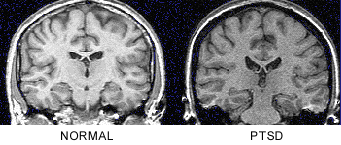
History of PTSD in Veterans: Civil War to DSM-5

By Matthew J. Friedman, MD, PhD, Senior Advisor and former Executive Director, National Center for PTSD

Exposure to traumatic experiences has always been a part of the human condition. Attacks by saber tooth tigers or twenty-first century terrorists have likely led to similar psychological responses in survivors of such violence. Literary accounts offer the first descriptions of what we now call posttraumatic stress disorder (PTSD). For example, authors including Homer (The Iliad), William Shakespeare (Henry IV), and Charles Dickens (A Tale of Two Cities) wrote about traumatic experiences and the symptoms that followed such events.

The PTSD diagnosis has filled an important gap in psychiatry in that its cause was the result of an event the individual suffered, rather than a personal weakness. PTSD became a diagnosis with influence from a number of social movements, such as Veteran, feminist, and Holocaust survivor advocacy groups. Research about Veterans returning from combat was a critical piece to the creation of the diagnosis. War takes a physical and emotional toll on Servicemembers, families, and their communities. So, the history of what is now known as PTSD often references combat history.

Early attempts at a medical diagnosis
Accounts of psychological symptoms following military trauma date back to ancient times. The American Civil War (1861-1865) and the Franco-Prussian War (1870-1871) mark the start of formal medical attempts to address the problems of military Veterans exposed to combat. European descriptions of the psychological impact of railroad accidents also added to early understanding of trauma-related conditions.

Nostalgia, Soldier's Heart, and Railway Spine
Prior to U.S. military efforts, Austrian physician Josef Leopold (1761) wrote about "nostalgia" among soldiers. Among those who were exposed to military trauma, some reported missing home, feeling sad, sleep problems, and anxiety. This description of PTSD-like symptoms was a model of psychological injury that existed into the Civil War.

A second model of this condition suggested a physical injury as the cause of symptoms. "Soldier's heart" or "irritable heart" was marked by a rapid pulse, anxiety, and trouble breathing. U.S. doctor Jacob Mendez Da Costa studied Civil War soldiers with these "cardiac" symptoms and described it as overstimulation of the heart's nervous system, or "Da Costa's Syndrome." Soldiers were often returned to battle after receiving drugs to control symptoms.

The thought that physical injury led to PTSD-like symptoms was supported by European reports of "railway spine." As rail travel became more common, so did railway accidents. Injured passengers who died had autopsies that suggested injury to the central nervous system. Of note, Charles Dickens was involved in a rail accident in 1865 and wrote about symptoms of sleeplessness and anxiety as a result of the trauma.

Shell Shock
In 1919, President Wilson proclaimed November 11th as the first observance of Armistice Day, the day World War I ended. At that time, some symptoms of present-day PTSD were known as "shell shock" because they were seen as a reaction to the explosion of artillery shells. Symptoms included panic and sleep problems, among others. Shell shock was first thought to be the result of hidden damage to the brain caused by the impact of the big guns. Thinking changed when more soldiers who had not been near explosions had similar symptoms. "War neuroses" was also a name given to the condition during this time.

During World War I, treatment was varied. Soldiers often received only a few days' rest before returning to the war zone. For those with severe or chronic symptoms, treatments focused on daily activity to increase functioning, in hopes of returning them to productive civilian lives. In European hospitals, "hydrotherapy" (water) or "electrotherapy" (shock) were used along with hypnosis.
Battle Fatigue or Combat Stress Reaction (CSR)

In World War II, the shell shock diagnosis was replaced by Combat Stress Reaction (CSR), also known as "battle fatigue." With long surges common in World War II, soldiers became battle weary and exhausted. Some American military leaders, such as Lieutenant Gen. George S. Patton, did not believe "battle fatigue" was real. A good account of CSR can be found in Stephen Crane's Red Badge of Courage, which describes the acute reaction of a new Union Army recruit when faced with the first barrage of Confederate artillery.

Up to half of World War II military discharges were said to be the result of combat exhaustion. CSR was treated using "PIE" (Proximity, Immediacy, Expectancy) principles. PIE required treating casualties without delay and making sure sufferers expected complete recovery so that they could return to combat after rest. The benefits of military unit relationships and support became a focus of both preventing stress and promoting recovery.

Development of the PTSD diagnosis
In 1952, the American Psychiatric Association (APA) produced the first Diagnostic and Statistical Manual of Mental Disorders (DSM-I), which included "gross stress reaction." This diagnosis was proposed for people who were relatively normal, but had symptoms from traumatic events such as disaster or combat. A problem was that this diagnosis assumed that reactions to trauma would resolve relatively quickly. If symptoms were still present after six months, another diagnosis had to be made.

Despite growing evidence that trauma exposure was associated with psychiatric problems, this diagnosis was eliminated in the second edition of DSM (1968). DSM-II included "adjustment reaction to adult life" which was clearly insufficient to capture a PTSD-like condition. This diagnosis was limited to three examples of trauma: unwanted pregnancy with suicidal thoughts, fear linked to military combat, and Ganser syndrome (marked by incorrect answers to questions) in prisoners who face a death sentence.

In 1980, APA added PTSD to DSM-III, which stemmed from research involving returning Vietnam War Veterans, Holocaust survivors, sexual trauma victims, and others. Links between the trauma of war and post-military civilian life were established.

The DSM-III criteria for PTSD were revised in DSM-III-R (1987), DSM-IV (1994), DSM-IV-TR (2000), and DSM-5 (2013) to reflect continuing research. One important finding, which was not clear at first, is that PTSD is relatively common. Recent data shows about 4 of every 100 American men (or 4%) and 10 out every 100 American women (or 10%) will be diagnosed with PTSD in their lifetime.

An important change in DSM-5, is that PTSD is no longer an Anxiety Disorder. PTSD is sometimes associated with other mood states (for example, depression) and with angry or reckless behavior rather than anxiety. So, PTSD is now in a new category, Trauma- and Stressor-Related Disorders. PTSD includes four different types of symptoms: reliving the traumatic event (also called re-experiencing or intrusion); avoiding situations that are reminders of the event; negative changes in beliefs and feelings; and feeling keyed up (also called hyperarousal or over-reactive to situations). Most people experience some of these symptoms after a traumatic event, so PTSD is not diagnosed unless all four types of symptoms last for at least a month and cause significant distress or problems with day-to-day functioning.

Today VA operates more than 200 specialized programs for the treatment of PTSD. In Fiscal Year (FY) 2013, more than a half million Veterans diagnosed with PTSD received treatment at VA medical centers and clinics.

VA is committed to provide the most effective, evidence-based care for PTSD. It has created programs to ensure VA clinicians receive training in state-of-the-art treatments for PTSD. At of the end of FY 2013, VA had trained more than 5000 of its clinicians to use Cognitive Processing Therapy (CPT) or Prolonged Exposure (PE), which are cited by the Institute of Medicine Committee on Treatment of PTSD as proven to be effective treatments for PTSD.

VA's National Center for PTSD was created in 1989 by an act of Congress, and celebrated its 25th anniversary on August 29, 2014. We continue to be at the forefront of progress in the scientific understanding and treatment of PTSD. In addition to improving upon existing treatments, we are researching effective new treatments. We are also developing new educational products such as our What is PTSD? whiteboard video. For more information on the National Center for PTSD, please visit our About Us section of the website.

Sources
Portions of this fact sheet originally appeared in a Veterans Day observance post on VA's blog, VAntage Point (November 7, 2013). For more information about the history of the PTSD diagnosis, see PTSD History and Overview in the "Professional Section" of our website.

From: ptsd.va.gov
Thursday, April 6, 2017

Glowing Civil War Flesh Wounds

By Adrian, 4-4-16

When Civil War soldiers were injured at the Battle of Shiloh, their wounds emitted something they called Angel's Glow. If only they'd known the truth.

AN ILLUMINATING BATTLE

During the Civil War, the Battle of Shiloh produced more than 23,000 casualties and was the bloodiest battle in American history at the time.

On April 6, 1862, Confederate soldiers surprised Union soldiers camped near the Tennessee River. The Confederacy made a strong showing that first day, but Union reinforcements arrived the following day and ended the battle.

The fact that the South nearly won this decisive fight wasn’t what was so illuminating about the battle. Following the fight, the surviving soldiers were stuck waiting for medics to arrive, sitting in the rain and mud for two days straight. As night fell on the wounded survivors, they noticed something creepy: their wounds were glowing.

ANGEL’S GLOW

Ignoring the fact that glowing might not be the most tactically intelligent situation for war, the fact is that the human body shouldn’t glow. And as if a gaping flesh wound isn’t scary enough, imagine looking down at your bullet wound and seeing a light blue glow coming from it.

At a time when a small cut could get infected and kill you, I doubt glowing battle wounds would have been a welcome sight. But as the soldiers ended up in field hospitals, they started to notice that the ones afflicted by the glowing had a better survival rate than the ones who didn’t.

As a result, the strange phenomena came to be known as “Angel’s Glow.”

THE BRIGHT LIGHT OF TRUTH

While the soldiers might have thought it was the healing touch of angels causing their wounds to glow, the truth isn’t as comforting.

Nematodes, or roundworms, are a typically parasitic worm. There are thought to be a million different kinds of nematodes, but the ones in question fed on insects found in the dirt and mud in the area.

These nematodes hunt for insect larvae in the mud, burrow into their bodies, and then regurgitate a bacteria into the larvae which kills the host from the inside out. This bacteria is called Photorhabdus luminescens, and it’s bioluminescent and glows a soft blue.

The soldiers had nematodes living in their wounds vomiting up a kind of bacteria! The idea of having roundworms in your gunshot wound is gross, but the ability to see the bacteria they’re vomiting is a new kind of creepy.

Luckily for the soldiers, the P. luminescens were working to devour the germs and bacteria that otherwise would have lead to an infection. So having worms might not be a bad thing.. But just for the record, if I’m ever injured on a battlefield, I’d much rather a round of antibiotics to this alternative.

Image: Nematodes

From: ripleys.com

Captain Minié’s Deadly Invention at Inkerman

By Victor Kamenir, 1-22-16

The force multiplier that allowed the outnumbered British to stand up to the overwhelming numbers of Russian attackers at Inkerman was the Minié bullet (not ball). The Russian soldiers, still armed with smooth-bore muskets, faced the daunting task of advancing into the muzzles of British Minié bullet-firing Enfield rifled muskets. The rapid-firing, deadly accurate British musketry literally mowed down the Russian ranks.

Since the Napoleonic Wars, European infantry had faced the dilemma of choosing between slow-firing but accurate rifles and faster firing but less accurate muskets. The ball fired by a smooth-bore musket did not have a tight fit, and upon leaving the musket’s muzzle it often went astray. On the other hand, the grooves inside the rifle barrel tightly gripped and spun the bullet, giving it range and accuracy.

In 1849 a French armory captain, Claude-Etienne Minié, an inspector of musketry at the military academy at Vincennes, found the solution to merge the two. The Minié bullet, made out of soft lead, was not really a ball, but rather a cylindrical bullet. Being smaller than the diameter of the barrel, the Minié bullet could be easily dropped inside the barrel. Shaped like a cone with a cavity in its base, the Minié bullet had three angular grooves on its body. When the powder charge exploded against the cavity in its base, the bullet would expand the grooves and create a tight fit in the rifled barrel. The cavity in the bullet’s base also helped to a degree in cleaning out the barrel of the black-powder fouling.

Before the advent of rifles, the artillery was the primary arm used to strike an enemy at a distance. The numbers of rifle-armed specialists were too few to seriously alter the makeup of the battlefield. But when regular infantry units became armed with rifled muskets firing Minié bullets, the artillery suddenly found itself within the range of hostile infantrymen. At the Battle of Inkerman, Russian artillerymen suffered greatly from British infantry fire.

The invention of the Minié bullet also changed the way infantry was employed in battle. The dense infantry columns of Napoleonic times were replaced with troops fighting in lose line formations and volley fire gave way to fire-at-will. To their dismay, the large Russian columns were decimated by British rifle fire during the Battles of Alma and Inkerman. Similar weapons were also used with devastating effect during the American Civil War a decade later.

Minié bullets significantly helped in removing cavalry as a decisive force on the battlefield, as well. During Napoleonic times, the infantry had to form a bayonet-bristling square to protect itself from cavalry. Now, the infantry was able to bring fire on the advancing cavalry at much longer distances and with much greater accuracy. The advent of the Minié bullet thus signified a turning point in military technology, marking the end of massed formations and the beginning of more decentralized operations by smaller units.

From: warfarehistorynetwork.com

Oriana Moon Andrews: First Woman Doctor in the Confederate Army

By Maggie MacLean, 4-8-15

Dr. Oriana Moon Andrews was a remarkable woman who served as the first female doctor in the Confederate Army. After the Civil War, she was physician to women and children, but her family had to move so frequently she was not able to establish a consistent practice. Chronic illness and childbirth at an advanced age ended her life much too soon.

Early Years
Oriana Russell Moon was born August 11, 1834 the second of seven children born to Anna Maria Barclay Moon and Edward Harris Moon. Oriana lived with her family at Viewmont, a 1500-acre estate in Scottsville, Albemarle County, Virginia. Edward Moon was a wealthy merchant, while Anna Maria had inherited her own wealth from her stepfather, including Viewmont and all of its slaves.

Edward Moon was a well-educated man, and he purchased an unusually large library, which included history, poetry, fiction and scientific works. He then hired the finest tutors for his children in literature, history, music and science. For the first sixteen years of her life, Oriana was addicted to reading, sometimes refusing to stop reading to eat.

At a time when Southern society dictated that young women be tutored privately and trained in the household arts, Edward Moon permitted his daughters to pursue their own interests. Oriana attended Emma Willard's Troy Female Seminary in Troy, New York during the 1850-1851 school year. After graduating there, she returned to Virginia, talking about the independence of Northern women.

Then, at the age of eighteen, Miss Moon decided she wanted to be a doctor. Edward Moon readily agreed that she should pursue a medical career, but he did not live to see her become a doctor. In 1854, Oriana enrolled in the Female Medical College of Pennsylvania in Philadelphia. At that time the general public believed that women were not capable of mastering the subject matter, and they would be much too squeamish to actually practice medicine.

Career in Medicine
Oriana proved them all wrong, but her path would not be easy. Female students were not allowed to work in hospitals to gain clinical experience working with patients, so the College set up its own clinic where they treated women and the poor. As her thesis, she wrote about the relationship between cardiac and pulmonary diseases, and she was awarded her Doctor of Medicine in 1857.

Oriana then returned to Viewmont. In 1858, her uncle, James Turner Barclay, decided to return to Jerusalem with his family for a second missionary tour as a Disciples of Christ minister, physician and student of the Holy Land. Oriana accompanied the Barclays and practiced medicine during her stay there.

In the summer of 1859, Oriana returned to her Virginia home, where she continued her medical practice as a woman's physician for her social circle and for the the Moon family slaves. Her patients adored their young female physician. Some male physicians grudgingly accepted Oriana as an unusual woman doctor. However, despite much urging, Dr. Moon consistently declined to 'hang out her shingle' as a general practitioner.

The Civil War
The the Civil War broke out in 1861, and Virginia seceded from the Union on May 23, 1861. Oriana, her mother and her brother drove the family carriage to Charlottesville ten miles away. Their journey was made to convert the family's cash and other marketable assets into currency or bonds for the Confederacy. A notice on the bank wall stressed the urgent need of physicians, surgeons and nurses for the Confederate Army.

Dr. Moon volunteered her services to the Confederacy in several letters written to General John H. Cocke between April and July 1861. In a letter dated July 19, 1861, she wrote:

"My most respected Friend,
Owing, I suppose, to our regular postal arrangements, your kind communication of Tuesday has just been received. I have not as yet entered into service; neither shall I, without consulting you, if you will allow me that high privilege! I have been willing and even anxious to be engaged in ministering to the wants of the sick, but after you so kindly proposed to take the matter in hand, I thought it would be better to wait and learn the result...

"If it will not be too great an imposition on your time and generosity, I would prefer to have you make any arrangements for me you may see proper. If the ladies of Richmond address me on the subject, I will enclose their communications to you. Enclosed I send you some suggestions, which strike me as being good...

"I would prefer to be in a Surgical Hospital where I would assist in the operations... I will go anywhere or do anything they may see fit to assign me, if it is to follow the army and seek the wounded on the field of battle."

Woman Surgeon in the Confederacy
On July 22, one day after the First Battle of Bull Run, Dr. Moon received word to report to the Charlottesville General Hospital which included buildings converted for that purpose at the University of Virginia. Soon the hospital overflowed with wounded from Bull Run and spilled over to private homes nearby. Dr. Moon was assigned a ward in this hospital, and was awarded a surgeon's commission as a captain in the Confederate Army, reportedly the only one given to a woman.

A letter appeared in the Richmond Daily Dispatch on August 1, 1861, describing the situation at that hospital and Dr. Moon's role there:

"The state of the hospital is most satisfactory. The few cases of death are extremely cheering. But one of the wounded has so far died; he was a Yankee and fearfully injured. The largest number of wounded belong probably to the 4th Alabama Regiment, and there are also several young men of the Oglethorpe Light Infantry from Savannah, and half dozen students from the University of Oxford, Mississippi here. By far the large majority of sick are down with the measles and will easily recover. Among the more seriously wounded are also two Yankee captains from a New York Regiment.

"Thanks to the energy and zeal displayed on all sides, order begins to reign and system to prevail amid the immense number. More physicians have arrived from other towns; among them Dr. Alexander Rives, late house-surgeon of Bellevue Hospital, New York; Dr. Moon, a young lady of the neighborhood, to whose skillful and experienced hands the care of a ward has been entrusted..."

Dr. John Andrews
When the Civil War broke out, Dr. John Summerfield Andrews, aged 23, was a practicing physician in Memphis, Tennessee. He quickly arranged his personal affairs and headed for Virginia. Arriving a few days before the Battle of Bull Run on July 21, 1861, he cared for his brothers after they were injured in that battle.

When Confederate General Bernard Bee visited the field hospital, he immediately commissioned Dr. Andrews a surgeon and put him in charge of the wounded men of the 4th Alabama Regiment. After the battle ended, the Confederate wounded were taken to the Charlottesville General Hospital, John discovered that his brother Robert's medical condition was grave.

Dr. Andrews asked for another surgeon to examine his brother, and Dr. Moon was called in. When John looked up from his seat at his brother's bedside, he was astonished to see a young woman. After a thorough examination, the doctors retired to an adjoining room for consultation. Dr. Moon advised against surgery, fearing it would kill the young soldier. John agreed that the operation should be deferred. They packed ice around Robert's chest to reduce his fever, but he died two days later.

A few months later illness forced Dr. Moon to give up her ward. She returned to Viewmont where she was cared for by her mother. At his first opportunity, Dr. John Andrews hired a horse and rode the ten miles to Viewmont to check on Oriana's health. He remained there several days before returning to Charlottesville.

Marriage and Family
Dr. Andrews also installed himself as physician to Dr. Moon, who would be confined to bed for more than a month. His visits to Viewmont multiplied and their friendship took on a deeper meaning. John requested leave to get married, and on November 28, 1861, John Andrews and Oriana Moon married at Viewmont. She was 27.

After their wedding, Dr. John Andrews was granted leave to seek reassignment in Richmond. These hospitals daily received wounded soldiers other areas of Virginia. Every medical person was needed, but records show that John did not resurface in Richmond until late January 1862. On February 1, 1862, Dr. Andrews appeared before a medical review board, and he was declared unsatisfactory as a Confederate surgeon. He resigned his commission the same day.

Civilian Life During the War
John and Oriana continued living at Viewmont, and their first child, Henry Horton Andrews, was born there on October 30, 1862, but he died from croup in May 1863. On October 1, 1863, a second son, James Barclay Andrews, was born. The Andrews family moved from Viewmont to the Bel Air estate, approximately three miles from Viewmont. On February 9, 1865, Oriana gave birth to a third son, William Luther Andrews.

General Philip Sheridan's Union soldiers marched through the area enroute to Scottsville in early March 1865. Sheridan's goal was to destroy the canal and any food and supplies that would aid the Confederacy. Oriana and John moved their two sons back to Viewmont, where they remained until Lee surrendered at Appomattox on April 9, 1865.

Move to Alabama
In 1869, Dr. John Andrews' family in Alabama assured him that there was a physician's position for him in Florence, Alabama. Oriana and their youngest son caught a train in Charlottesville, while John and their eldest son drove a wagonload of their possessions to Florence.

John soon realized that the Florence area could not pay much more than gratitude for his medical services. In early 1870, he purchased a small tract of land in Hardin County, Tennessee and built a rough board dwelling for his family. Oriana and their two sons moved there later that year. Although accustomed to far more comfort, she accepted her new situation with quiet dignity.

In their three years there, the Andrews family moved three times. Their patients lived in poverty and could not pay their physician for services rendered. Due to a chronic heart ailment, Oriana's health suffered under the strain and she was confined to bed. The Moons urged the family to return to Viewmont.

John disposed of all of their furniture and shipped their books, clothing and a few small trunks of keepsakes via railroad to Virginia. He also purchased four mules and a new wagon with canvas stretched over the bows and a bed with springs in the rear. John and Oriana made the six-week trip back to Virginia in stages to avoid antagonizing Oriana's fragile health.

Late Years
In 1874, the family settled down at Viewmont again, where Oriana tutored her sons in the family library, with the books her father had purchased for her many years before. Five months of the year, the boys hiked five miles to Church Hill, the home of their Uncle Isaac Moon who taught a public school there. When not studying, the boys roamed the woods and helped with corn planting in the nearby fields. Another son was born in 1875: Owen Merriweather Andrews.

In 1879, the heirs of Anna Marie Barclay Moon, Oriana's mother, decided to dispose of her estate and divide the proceeds among them. The Andrews had to move again, this time to a farm in Buckingham County, Virginia. In 1880, Oriana gave birth to another son, Frank Moon Andrews. (She was 46!)

Oriana's health worsened. Within a year, the Andrews moved to Norwood, Nelson County, Virginia, where they rented a farm. Dr. John Andrews found an active medical practice in Norwood and also planted corn in the fields along the James River. During the spring of 1881, torrential rains fell and swept away their crops. The Andrews once again returned to Scottsville.

In 1882, John and Oriana rented Old Hall, a mansion built in 1830 when Scottsville was a thriving river town. There the two doctors opened the First Sanatorium of Southside Albemarle and began active practice with women and children as their patients. It must have been gratifying for Oriana to finally be able to practice medicine again, but they had more patients than they could accommodate, and the work continually taxed her strength. She was forced to quit the practice in December 1883.

In the early morning hours of December 24, 1883, Dr. Oriana Moon Andrews died of pneumonia at age 49. She was buried at the Scottsville Presbyterian Cemetery.

Image 1: Dr. Oriana Moon Andrews in 1861 with her husband, Dr. John Andrews. Credit: Woman's Missionary Union

Image 2: Viewmont, the Moon family estate where Oriana lived most of her life. Credit: Scottsville Museum

Image 3: Old Hall in Scottsville, Virginia. Oriana died in the east bedroom. Credit: Scottsville Museum

From: civilwarwomenblog.com

Hospital Flags

By Jack Thomason

The US Army regulations (1854) called for a red flag for hospitals at the beginning of the war, dating back to the reorganization of Amy soon after the War with Mexico. Red flags were used, starting with the French Army in the 1700’s and later on in England. General Beauregard issued orders that red flags were to be used to mark the locations of Hospitals, of the Confederate Army of the Potomac. It appears that General Beauregard copied the U.S Army regulations of 1854. Several late war captured red Confederate Hospital flags survive.

The yellow quarantine flag was adopted, per Act of Congress, in 1798 to mark the locations of the “Marine Hospital Service” (Government run) Hospitals. The yellow quarantine flag was first used by the City of Philadelphia in 1699 to mark the locations of sick seamen under the maritime quarantine laws. In 1860 there were nineteen “Marine Hospital Service” hospitals along the eastern cost and several others along the Gulf of Mexico cost. At the beginning of the war those hospitals were taken over for military use in the north and south. The U.S. Army did not adopt the yellow hospital flag until 1862, General Orders 102, Army of the Potomac. The Department of the Rappahannock in 1863, General orders 53. The Department of the Cumberland as with the Army of Ohio later in 1863 adopted the yellow flag for hospitals. The Army of the West replaced the red flag for hospitals with an U.S. National flag in early 64. Later in 64 they conformed to an Act of Congress of the yellow flag with the green H.

The U.S. Hospital Department, the U.S. Medical Service and the Ambulance Department were separate departments and had deferent regulation regarding flags and the deferent departments had their own hospitals. In most cases the word hospital refers to the larger general hospitals in larger cities & towns, field hospitals located near the battle field and aid stations or ambulance depots located at the rear of the army on the field of battle.

The yellow flag shows up very early for Confederate hospitals regardless of the orders from General Beauregard. Many of those hospitals were run by civilian doctors so, I guess, Army regulations didn’t apply. As with the U.S. Army, the Confederate Medical Service and the Ambulance Department were deferent departments. The Ambulance Department pretty much followed orders on the use of red flags for their field hospitals and depots, while the Medical Department used yellow flags; they had more civilian doctors then the Ambulance Department. It is documented that in fairly safe areas, Hospitals were usually just marked by a national flag, both north and south. There is supported data that the Confederate Army used red and white flags to ID their Ambulance trains. There is also data that the U.S. Army used small Corps flags bordered in green on their Ambulance trains. By trains, I mean both the coal powered ones and the horse powered ones.

On the regimental level, both north & south, both color flags were used to mark aid stations. For more documentation on the use of yellow flags at this level of medical care for the troops. Contact: Jack Thomason

Image 1: Hospital flag 1861 - 1863

Image 2: Ambulance signal

Image 3: US Hospital flag adopted 1864

From: docthomason.org

PTSD and the Civil War

By Sarah Handley-Cousins, 8-13-14

Daniel Folsom, a tinsmith from northern New York, enlisted in the Union Army just days after the fall of Fort Sumter. His exemplary service through years of long marches and hard battles led to two promotions, but during the Battle of Fredericksburg in late 1862, something changed. Folsom seemed uneasy. He was still troubled months later when the regiment mustered out. He returned home, opened his own tin shop and tried to focus on work.

As time passed, Folsom’s motivation to work waned. He neglected the tin shop and wandered, aimless, around the village. In July 1863, when the first men in his neighborhood were called by the draft, Folsom snapped. Terrified that he would be sent back to the Army, he became sleepless and manic, and then fell into a severe depression. When he attempted suicide, his family had him committed to the State Lunatic Asylum in Utica. In the asylum, the young veteran grappled with his paranoia and guilt. At times, he begged the attendants to kill him.

Eventually, Folsom slowly began to improve. “I am not injoying myself much at presen,” he wrote to his sister in the spring of 1864. Still, he assured her, he had recovered, and implored her to persuade their father to retrieve him from the asylum. Folsom was especially concerned about finding work. It seemed to him that the longer he was institutionalized, the less likely it would be for him to succeed in business. “I should like to get out of this city [and] go into business iff I stay here any longer the world will be a blank,” he wrote. “I really think there is a chance for me yet.”

Folsom was not alone: Tens of thousands of veterans damaged by the war had to learn how to live and work with their wounded bodies. In much the same way, Folsom had to adapt to life with a wounded mind. His illness – what today we would likely call post-traumatic stress disorder – had damaged his reputation, but he might be able to prove himself through clean living and dedication.

Folsom’s difficulty was compounded by a stigma that held that mental illness was a personal failing and should be kept secret. That stigma has proved difficult to kill. Even today, the case files of the men and women treated in New York State’s asylums during the 19th century are restricted in the name of patient privacy. Thus, the names of the soldiers in this article have been replaced with pseudonyms, and other identifying markers have been removed.

The psychological implications of the Civil War have been long debated by historians. Statistically speaking, insanity was not a major cause of discharge for the Union Army. “The Medical and Surgical History of the War of the Rebellion,” an official report by the War Department, lists only 853 discharges by reason of insanity during the war years, accounting for less than 1 percent of total discharges. Terms used to describe mental illness during the 19th century, however, such as neuralgia, nostalgia, headache and sunstroke, were counted separately, which suggests the possibility of a higher number. Of course, officers wanted to maintain as strong a fighting force as possible, so soldiers could be discharged for insanity only if their commanding officers, in addition to medical staff members, agreed that their symptoms were obvious and disruptive. Only the most disturbed soldiers, therefore, received discharges. Moreover, after the autumn of 1863, soldiers could be discharged for insanity only after the physicians at the Government Hospital for the Insane in Washington examined them and declared them too insane for duty.

There are no statistics that can tell us how many soldiers experienced moments of panic and helplessness, or how many feared they might be losing control. There is also nothing to teach us about the experiences of most of the soldiers after they were discharged. Asylum records, like those of Daniel Folsom, allow us a glimpse into the lives of such veterans and to see the ways the traumas of war affected their ability to navigate the day-to-day obligations of their lives.

Folsom, as it turns out, was fortunate – as he indicated to his sister, he did still have a chance. As a postscript to his letter, he made a promise: “I shall try and be a man.” His way of keeping his word was by re-enlisting in the Union Army upon his release, hoping to reaffirm his manhood through battle. He received a commission as a first lieutenant in a New York regiment. When the war ended, Folsom enjoyed success as a tinsmith. He even married and fathered six daughters.

For other soldiers, the distress of war had more sinister consequences. Many soldiers had difficulty letting go of the rage that had been vital in battle. When they returned home, this anger was sometimes channeled into domestic violence. Clinton Moore came home bitter and restless after he was discharged. He drank heavily, beat his wife and terrorized his neighbors. When the local constable came to arrest him, Moore hurled a stove down the stairs and wounded the officer in the head. The disgruntled constable, upon finally delivering Moore to Utica, described the former soldier as “3 parts ugly and 1 part crazy.”

Moore soon escaped. He returned home and spent the next several months menacing his family and neighbors before returning to Utica. After his return, Moore seemed ready for a change. He wrote to Dr. John P. Gray, the superintendent of the asylum, promising he would find honest work if he could only be released, even insisting that he would “let Licker alone entirely.” Unwilling to wait for the superintendent’s assent, Moore escaped again in late summer, and from that point disappears from historical record. Whether he was able to change or find work is unknown.

Some soldiers were entirely undone by the war. Andrew Hamilton returned home a changed man in June 1864. He had survived the horrors of Chancellorsville and Lookout Mountain and bouts with camp diseases. He had survived prison and hundreds of miles of marching, but when he got home, though his body seemed strong, his mind was altered. He raved about the war. He had insomnia and refused to eat. Hoping for a cure, his family committed Hamilton to the asylum at Utica.

Attendants confined the frantic young man to a “Utica crib,” a bedlike wooden cage used to restrain and ostensibly calm patients. But Hamilton could not be soothed. He beat against the bars until his arms and legs were bruised. He shouted orders to phantom soldiers and drove teams of invisible horses. By mid-July, at only 23 years old, Hamilton was dead.

During the dark days of war, soldiers fantasized about their return home, imagining it would be the moment their troubles would end. Daniel Folsom certainly did. “I thought I had got through the hardest of my life when I got through solgerin’,” he wrote his sister. But for Folsom, and the many other soldiers who bore the psychic scars of war, their troubles had only just begun.

Sources: Jeffrey Allen Smith and B. Christopher Frueh, “Minds at War,” New York Times Disunion, March 20, 2013; Eric Dean, “Shook Over Hell: Post-Traumatic Stress, Vietnam and the Civil War”; Joseph K. Barnes, “The Medical and Surgical History of the War of the Rebellion”; New York State Archives, “Utica State Hospital Patient Case Files, 1843-1898;” Ancestry.com and genealogical records of the Church of Jesus Christ of Latter-day Saints; 1880 United States Federal Census.

Image: Civil War veterans in 1884, with William T. Sherman in the front row centerCredit Library of Congress

Sarah Handley-Cousins is a graduate student in history at the University at Buffalo.

Correction: August 13, 2014
This article originally misstated the name of the school where the author is a graduate student. It is the University at Buffalo, not the University of Buffalo.

From: opinionator.blogs.nytimes.com

Walt Whitman’s Civil War: Stories of the Wounded

By Roy Morris Jr., 3-1-17

Walt Whitman went to Washington in 1863 searching for his brother. He stayed throughout the war visiting wounded soldiers at military hospitals.

Walt Whitman arrived in Washington, D.C., in late December 1862, intending to stay for a few days. He wound up staying for the next 10 years. For the first three of those years, the great American poet was a regular visitor to the various military hospitals in and around the nation’s capital, where he devoted himself to bringing cheer and companionship to the thousands of suffering young soldiers confined to their beds with wounds, illness, or infection. By the end of the war, Whitman would personally make more than 600 visits to the hospitals and speak to some 100,000 soldiers during his rounds. In his own humble way, Whitman was also a war correspondent—not on the front lines of the battlefields, but in the rear, where the battles’ true costs were hidden away.

“A Sight in Camp”
Whitman’s time in Washington began with the wounding of his brother George at the Battle of Fredericksburg, Virginia, in late December 1862. Walt was at home in Brooklyn with his mother on the morning of December 16 when he unexpectedly came across a list of regimental casualties in the New York Tribune. Among those listed was “First Lieutenant G.W. Whitmore [sic], Company D.” Fearing the worst, Walt threw together some belongings and hurried south to Washington, where the main Union hospitals were located.

For three days and nights Whitman searched in vain for his brother, trudging from hospital to hospital through streets clogged with dispirited Union soldiers and wild rumors of impending Confederate invasion. The futile period of searching, he told his mother, was “the greatest suffering I ever experienced in my life.” It did not help that Whitman’s pocket was picked in the train station in Philadelphia, leaving him literally penniless. At last someone suggested he go to Falmouth, outside Fredericksburg, where the Army of the Potomac was camped for the winter. There he found George in surprisingly good health, only slightly wounded by a piece of Confederate shrapnel that had pierced his cheek. George, for his part, was unfazed by his close brush with death and glorying in his promotion to captain of the 51st New York Infantry.

Whitman spent 10 days visiting his brother and the other soldiers in the regiment. He was struck immediately by how young many of the soldiers were. “The mass of our men in our army are young,” Whitman wrote in an article published in the New York Times. “It is an impressive sight to me to see the countless numbers of youths and boys, many of them already with the experiences of the oldest veterans.” Of the original 1,000 soldiers who had enlisted in George’s regiment at the start of the war, only about 200 still survived. Their patriotism, if not their numbers, remained high. “The men looked well to me,” Whitman noted in the Times article, “with the look of men who had long known what real war was, and taken many a hand in—a regiment that had been sifted by death.”

As a civilian, Whitman marveled at the men’s matter-of-fact attitude in the face of death. “Death is nothing here,” he wrote. “As you step out in the morning from your tent to wash your face you see before you on a stretcher a shapeless extended object, and over it is thrown a dark grey blanket—it is the corpse of some wounded or sick soldier of the regiment who died in the hospital tent during the night—perhaps there is a row of three or four of these corpses lying covered over. No one makes an ado.” He made notes for a new poem about one of the victims: “Young man, I think this face of yours the face of my dead Christ!” It would later become the basis of one of his most memorable poems, “A Sight in Camp.”

Whitman left Falmouth on December 28 aboard a government steamer bound for Washington. Traveling with him was a large contingent of seriously wounded soldiers headed for the various military hospitals in the rear. During the three-hour trip, Whitman went from man to man, collecting information to send to their families back home. It was the first humble step of a great one-man humanitarian enterprise. One of the men died before they docked at the Sixth Street wharf.

Back in Washington, Whitman found part-time work as a copyist in the paymaster’s office, where he saw firsthand the inadequate efforts by the government to aid wounded veterans. Each day he observed dozens of “poor sick, pale, tattered soldiers” climbing up five flights of stairs in search of back pay that was not always forthcoming. Many of the men had been honorably discharged from the Army, but without money to get home they were stuck in the hospitals and convalescent camps, surrounded by sick and dying comrades. Some were reduced to living on the streets.

The Shocking Conditions of Union Military Hospitals
With no particular plan or purpose, Whitman began visiting the hospitals. At first, it was merely to look in on the Brooklyn soldiers he had known before the war, but it soon became a daily routine. In the past, Whitman had occasionally gone to visit injured friends at the Broadway Hospital in New York, but nothing had prepared him for the sights, sounds, and smells of the army hospitals—they were literally a world unto themselves. By the end of 1862, there were approximately 35 hospitals in Washington, accommodating some 13,000 soldiers.

These hospitals, ranging in size from converted private mansions to filthy, mud-encrusted tents in contraband camps, were places to be feared by any thinking person. The great European medical advances in bacteriology and antisepsis were still tragically a few years in the future, and the cause and prevention of disease remained unknown. Typhoid fever, malaria, and diarrhea, the three most prevalent and deadly killers in the Civil War, tore through every hospital and camp, spread by infected drinking water, contaminated food, and disease-carrying mosquitoes. Meanwhile, the overworked and understaffed physicians continued to ascribe the soldiers’ ills to such fantastical causes as “malarial miasms, mephitic effluvia, crowd poisoning, sewer emanations, and poisonous fungi in the atmosphere.”

Sick soldiers could expect little in the way of help from their doctors. Indeed, many of the physicians made matters worse by violating the most basic of all medical tenets: First, do no harm. The doctors prescribed a bewildering and ineffective array of drugs at the first sign of illness. Diarrhea was treated with laxatives, opium, epsom salts, castor oil, ipecac, quinine, strychnine, turpentine, camphor oil, laudanum, blue mass, belladonna, lead acetate, silver nitrate, red pepper, and whiskey. Malaria called for large doses of quinine, whiskey, opium, epsom salts, iodide of potassium, sulfuric acid, wild cherry syrup, morphine, ammonia, cod liver oil, spirits of nitre, cream of tartar, barley water, and cinnamon. When all else failed, doctors harkened back to more medieval methods of treatment: bleeding, cupping, blistering, leeching, binding, and chafing.

Sharing hospital space with the ill were soldiers suffering from bullet and shrapnel wounds. Frequently, they were recuperating from amputations of their arms or legs and, more often than not, were also battling some sort of postoperative infection caused by the hospitals’ incredibly filthy conditions. Union surgeon W.W. Keen, a young Philadelphia physician who went through the war with the Army of the Potomac, left behind a vivid description of the typical operating procedures at the time. “We operated in old blood-stained and often pus-stained coats,” Keen wrote. “We used undisinfected instruments from undisinfected cases, and marine sponges which had been used in prior pus cases and had been only washed in tap water. If a sponge or an instrument fell on the floor it was washed and squeezed in a basin of tap water and used as if it were clean. The silk with which we sewed up all wounds was undisinfected. If there was any difficulty in threading the needle we moistened it with bacteria-laden saliva, and rolled it between bacteria-infected fingers. We dressed the wounds with clean but undisinfected sheets, shirts, tablecloths, or other old soft linen rescued from the family ragbag. We had no sterilized gauze dressing, no gauze sponges. We knew nothing about antiseptics and therefore used none.”

The predictable result of such hurried and horrific operations was postoperative infection. Pyemia, septicemia, erysipelas, osteomyelitis, tetanus, and gangrene were grouped together as “surgical fevers.” Pyemia, literally “pus in the blood,” was the most dreaded of all, with a mortality rate of 97.4 percent, but the other surgical fevers also claimed their deadly share of victims. Not without reason did Civil War soldiers fear doctors much more intensely than they feared the enemy. They had a greater chance of dying in the hospital than in the field.

Walt Whitman’s Hospital Visits
From the start, Whitman’s hospital visits were good therapy for him as well as the soldiers. The brave, uncomplaining young men who were fighting and dying for the Union cause restored his belief in the inherent strength and goodness of the American people. Coming on the heels of a half decade of personal drift and depression, Whitman’s experiences in Washington were nothing short of life altering. As he later told a friend, “There were years in my life—years there in New York—when I wondered if all was not going to the bad with America, but the war saved me: what I saw in the war set me up for all time—the days in the hospitals.”

Whitman prepared for his daily visits as carefully as a general prepared for a battle. He quickly found that outward appearance counted greatly with the men, and so he made it a point to bathe, dress, and eat a good meal each afternoon before starting his rounds. “In my visits to the hospitals,” he wrote, “I found it was in the simple matter of personal presence, and emanating ordinary cheer and magneticism, that I succeeded and helped more than by medical nursing, or delicacies, or gifts of money.” He wore a cheerful, wine-colored suit, a pair of hand-polished black Moroccan boots, and a wide-brimmed hat with a gold-and-black drawstring and gold acorns at the bottom. He told his mother: “I fancy the reason I am able to do some good in the hospitals among the poor languishing and wounded boys, is, that I am so large and well—indeed like a great wild buffalo.” Small-town soldiers from the West and Midwest had never seen a man quite like him.

Realizing that the soldiers needed more than his mere presence to comfort and inspire them, Whitman began bringing a knapsack full of little treats for the men, anything he could beg, borrow, or buy to make their stay in the hospital a little easier. Fruit, tobacco, candy, jelly, pickles, cookies, wine, brandy, shirts, handkerchiefs, clean socks, and underwear all went into his gift bag. During warm weather he sometimes brought ice cream to the men as a special treat. These gifts he distributed quietly and informally, knowing instinctively that the proud young soldiers would automatically resist any hint of pity. He carefully kept track of his gifts in small pocket notebooks, jotting down whatever he had learned from the patients he visited—name, rank, company, regiment, bed number, ward, hospital, nature of wound, and names and addresses of parents and wives. He kept a ready supply of paper and pens on hand for those wanting to write home. If a man was too weak to write for himself, Whitman took down dictation or simply wrote the letter for him.

A characteristic entry from Whitman’s notebook reveals a typical morning in the hospitals: “Bed 53 wants some licorice; bed 6 (erisypelas) bring some raspberry vinegar to make a cooling drink with water; bed 18 wants a good book—a romance; bed 25 (a manly, friendly young fellow, independent young soul) refuses money and eatables, so I will bring him a pipe and tobacco, for I see how much he enjoys a smoke; bed 45 (sore throat and cough) wants horehound candy; bed 11, when I come again, don’t forget to write a letter for him. One poor German, dying—in the last stages of consumption—wished me to find him a German Lutheran clergyman. One patient will want nothing but a toothpick, another a comb, and so on.”

“Here Comes That Odious Walt Whitman”
Others were visiting the hospitals as well. At the time Whitman began his visits, there were 25 separate soldiers’ aid groups in operation—16 sponsored by the individual states—along with the United States Sanitary Commission and the Christian Commission. Whitman admired the Christian Commission, a purely voluntary organization he himself had briefly joined, but he did not think much of the Sanitary Commission, whose members were paid for their work. Nor did Sanitary Commission members think much of Whitman. One disapproving commissioner, Harriet Hawley, complained to her husband: “Here comes that odious Walt Whitman to talk evil and unbelief to my boys. I think I would rather see the evil one himself—at least if he had horns and hooves.”

The soldiers had a more favorable impression of their unconventional visitor. Union Colonel Richard Hinton, who met Whitman at Armory Square Hospital while recovering from a bullet wound suffered at Antietam, contrasted Whitman’s easy-going style with that of the starchy Sanitary Commission. “When this old heathen came and gave me a pipe and tobacco,” Hinton wrote, “it was about the most joyous moment of my life. Walt Whitman’s funny stories, and his pipes and tobacco were worth more than all the preachers and tracts in Christendom. A wounded soldier don’t like to be reminded of his God more than twenty times a day. Walt Whitman didn’t bring any tracts or bibles; he didn’t ask if you loved the Lord, and didn’t seem to care whether you did nor not.”

“The Great Army of the Sick”
To help finance his visits, Whitman fell back on his prewar training as a journalist. Like many other American writers, he had started working for newspapers as a boy, beginning as a printer’s apprentice on the Long Island Patriot at the age of 12. By the time the Civil War began in 1861, he had worked for 14 different newspapers, mostly in Brooklyn and New York City, but also including a brief stint as editor of the New Orleans Crescent in the late 1840s. Two years before the war, he had lost his most recent newspaper job, as editor of the Brooklyn Daily Times, for writing editorials defending the sexual rights of women.

Whitman published his first hospital dispatch, “The Great Army of the Sick,” in the February 18, 1863, edition of the New York Times. The article had a double purpose: to raise money for Whitman’s continued hospital visits, and to encourage others to join in the work. “A benevolent person, with the right qualities and tact,” he wrote, “cannot make a better investment of himself, at present, anywhere upon the varied surface of the whole of this big world, than in these military hospitals, among such thousands of most interesting young men. It is enough to make one’s heart crack.”

Whitman described one such heartbreaking encounter with a young Bridgewater, Massachusetts, soldier whom he found languishing at Campbell Hospital during one of his first visits. John Holmes, a 21-year-old shoemaker by trade and a member of the 29th Massachusetts Infantry, had been brought to the hospital suffering from a severe case of diarrhea. The disease, much more serious than modern versions of the complaint, affected 54 percent of all Union soldiers and a staggering 99 percent of all Confederates and eventually claimed the lives of nearly 100,000 men during the course of the war. Holmes himself was near death when Whitman found him lying untended in Ward 6 of the hospital. “He now lay, at times out of his head but quite silent,” Whitman reported, “asking nothing of anyone, for some days, with death getting a closer and a surer grip upon him; he cared not, or rather he welcomed death. His heart was broken. He felt the struggle to keep up any longer to be useless. God, the world, humanity—all had abandoned him.”

Whitman happened to pass Holmes’s bed on his way out of the ward, and noticed “his glassy eyes, with a look of despair and hopelessness, sunk low in his thin, pallid-brown young face.” The poet stopped and made an encouraging remark; Holmes did not reply. “I saw as I looked that it was a case for ministering to the affection first, and other nourishment and medicines afterward,” Whitman wrote. “I sat down by him without any fuss; talked a little; soon saw that it did him good; led him to talk a little himself; got him somewhat interested; wrote a letter for him to his folks in Massachusetts; soothed him down as I saw he was getting a little too much agitated, and tears in his eyes; gave him some small gifts and told him I should come again soon.” When Holmes mentioned that he would like to buy a glass of milk from the old woman who peddled it in the wards, Whitman gave him some money. The young man immediately burst into tears.

Whitman continued to look in on Holmes, who remained dangerously ill for several weeks before eventually recovering his health and rejoining his unit. “The other evening, passing through the ward,” Whitman wrote, “he called me—he wanted to say a few words. I sat down by his side on the cot in the dimness of the long ward, with the wounded soldiers there in their beds, ranging up and down. Holmes told me I had saved his life. It was one of those things that repays a soldiers’ hospital missionary a thousandfold—one of the hours he never forgets.”

“The Great Army of the Sick” was well received by readers and earned Whitman a congratulatory letter from managing editor John Swinton and an extra $50 for his work. Three weeks later, Whitman wrote a second article, “Life Among Fifty Thousand Soldiers,” for the Brooklyn Daily Eagle. Unlike the Times piece, this article was geared toward hometown readers, and Whitman took pains to mention by name as many of the local soldiers as he could. “At a rough guess,” he wrote, “I should say I have met from one hundred fifty to two hundred young and middle-aged men whom I specifically found to be Brooklyn persons. Many of them I recognized as having seen their faces before, and very many of them knew me. Some said they had known me from boyhood. Some would call to me as I passed down a ward, and tell me they had seen me in Brooklyn. I have had this happen at night, and have been entreated to stop and sit down and take the hand of a sick and restless boy, and talk to him and comfort him awhile, for old Brooklyn’s sake.”

“Washington in the Hot Season”
In August 1863, Whitman published another article in the New York Times, “Washington in the Hot Season.” The long article gave readers a good description of the nation’s capital in the midst of the Civil War. “Soldiers you meet everywhere about the city,” Whitman wrote, “often superb looking young men, though invalids dressed in worn uniforms, and carrying canes or, perhaps, crutches. I often have talks with them, occasionally quite long and interesting. I find it so refreshing to talk with these hardy, bright, intuitive, American young men (experienced soldiers with all their youth.) There hangs something majestic about a man who has borne his part in battles, especially if he is very quiet regarding it when you desire him to unbosom. I now doubt whether one can get a fair idea of what this war practically is, or what genuine America is without some such experience as this I have had for the past seven or eight months in the hospitals.”

A longtime admirer of Abraham Lincoln, Whitman often caught a glimpse of the careworn president riding through the city in an open carriage. “I saw the president in the face fully,” he reported, “and his look, though abstracted, happened to be directed steadily in my eye. I noticed well the expression. None of the artists or pictures have caught the deep, though subtle and indirect expression of this man’s face. They have only caught the surface. There is something else there.” The two giants of the age only nodded to each other in passing; they never formally met. Whitman did attend a reception in the Blue Room at the White House following Lincoln’s second inauguration, where he observed the President in the receiving line. “I saw Mr. Lincoln, dressed all in black, with white gloves and a claw-hammer coat,” Whitman reported, “looking very disconsolate, and as if he would give anything to be somewhere else.” It was the last time he would see Lincoln alive. The president was assassinated two weeks later, an event that occasioned Whitman’s greatest poem, “When Lilacs Last in the Dooryard Bloom’d.”

Whitman published two other articles in the New York Times, “Our National City” and “Letter from Washington,” and the Brooklyn Union printed a short letter from him detailing the capital’s anxiety over the inconclusive military campaigning. He also worked sporadically on a new collection of poems, to which he gave the evocative title Drum-Taps. These poems ranged from the early recruiting poem “Beat! Beat! Drums!” to the poignant, semi-autobiographical poem “The Wound-Dresser,” in which he ruefully recalled his earlier bellicose writing: “Arous’d and angry, I’d thought to beat the alarum, and urge relentless war,/But soon my fingers fail’d me, my face droop’d and I resign’d myself,/To sit by the wounded and soothe them, or silently watch the dead.”

Return to Brooklyn
Whitman’s own robust health gave way in the face of repeated exposure to sick and dying soldiers, and he was forced to return home to Brooklyn in mid-1864 to recuperate from an undiagnosed illness—possibly hypertension complicated by a bad cold. It was a wonder he hadn’t gotten sick before he did. “O the sad, sad sights I see,” he told his mother, “the noble young men with legs and arms taken off—the deaths—the sick weakness—sicker than death, that some endure, after amputations, just flickering alive.” Nevertheless, he returned to Washington six months later to resume his hospital visits and reporting. His final newspaper articles summed up the wartime adventures of his brother George and his fellow 51st New York veterans. “The 51st,” he reported in the New York Times, “has been in seven general engagements, and sixteen skirmishes—acquiring a reputation for endurance, perseverance, and daring, not excelled by any in the whole army of the U.S.”

His last wartime article, “Return of a Brooklyn Veteran,” published in the Brooklyn Daily Union on March 16, 1865, recounted with pride George Whitman’s return from a Confederate military prison in Richmond and his four years of dangerous service on the battlefields of Maryland, North Carolina, and Virginia. “Of the officers that went with the regiment, not a single one remains,” Whitman wrote, “and not a dozen out of over a thousand of the rank and file. Most of his comrades have fallen by death. Wounds, imprisonment, exhaustion, &c., have done their work. His preservation and return alive seem a miracle. For three years and two months he has seen and been a part of war waged on a scale of amplitude, and with an intensity on both sides, that puts all past campaigning of the world into the second class.”

Of his own voluntary service as a witness to “war’s hell scenes,” Whitman maintained a lifelong modesty. “People used to say to me, Walt you are doing miracles for those fellows in the hospitals,” he told his young disciple Horace Traubel many years later. “I wasn’t. I was doing miracles for myself.” He never lamented his wartime service or what it cost him physically and emotionally. “I only gave myself,” he said. “I got the boys.” Half a decade before the war, he had written in Leaves of Grass, “I am the man, I suffer’d, I was there.” After the Civil War he could truly say that he had lived those words and helped, in his own way, to relieve the suffering.

Image 1: Walt Whitman, photographed by Mathew Brady in 1862.

Image 2: Bird’s-eye view of the Sixth Street Wharf at Washington, where Whitman arrived in early 1863. Wounded soldiers file from the paddle-wheeler John Brooks in the foreground.

Image 3: Convalescing soldiers and staff outside a Sanitary Commission lodge, one of 30 such facilities operated by the Commission in Washington during the war. Whitman didn’t think much of the Sanitary Commission.

From: warfarehistorynetwork.com

Military Dog Tag History

From: dogtagsonline.com

The First Military Dog Tags
At the start of the Civil War fallen soldiers on both sides who died in battle were generally buried where they fell. The remaining soldiers realized that, in the event of their own death, their remains would never be identified nor would their family be notified of their demise. To aid in their identification these soldiers began pinning paper and cloth ribbons, printed with their name, unit, and hometown, to their uniforms. They would also scratch this information onto the soft metal of their belt buckles and stencil their name and hometown on their knapsacks.

Shortly after this retailers and manufacturers saw a need and stated advertising ‘Soldier Pins’ in the periodicals of the time, such as Harper’s Weekly. These first military identification tags, which were pinned to the uniform, were available in gold and silver and came in different shapes to designate different branches of the military. These were not widely used.

Sutlers were civilian merchants who followed the troops and operated tent stores to supply tobacco and food staples to the soldiers. These sutlers also began supplying the soldiers with identification tags that were machine stamped from various soft metals. These were engraved with the soldier’s name, unit, and hometown and could also list the battles the soldier had participated in. There was a hole punched in the top and these first American 'dog tags' were worn around the neck hanging from a string or cord.

Military Dog Tags Made Standard Issue
In 1899 Chaplin Charles C. Pierce, Quartermaster of Identification in the Philippines, proposed adding an ‘identity disc’ to the standard combat field pack. Not much happened with this until The Army Regulations of 1913 made identification tags mandatory and by 1917 all of the soldiers were wearing an aluminum identification tag into combat. These aluminum identification discs were replaced by the Navy/Marine style oblong ‘Monel’ metal dog tag which was made of an alloy of copper and nickel. This style of dog tag was used well into WWII.

Military Dog Tags in World War 2
Testing of a new style of identification tag was started in 1938 and by 1940 the first rounded–end rectangle dog tag, known as the M1940 issue, was being introduced. These notched identification tags had the text debossed or stamped in and devices were available to actually use the dog tag itself to stamp military and medical records. With the addition of the blood type, tetanus shot information, and religious preference, this identification tag was now a life saving device.

One of the most common myths about these notched dogtags was that the identification tag was jammed into the teeth of the dead soldier to identify the body being returned home for burial. The truth of the matter is that the notch on the dog tag was used to position and align the dog tag on a location pin in the Addressograph embossing machines.

These M1940 notched identification tags were used until they were replaced by what is now known as the M1967 dog tag. The notch was eliminated and the text was now to be embossed, which is raised text like that on a credit card. These dogtags were made of T304 stainless steel and, for the first time, all branches of the US Armed Forces, including the Air Force, Army, Navy, and Marines, were all required to use the same dogtag. Although all branches of the Armed Forces now use the same dog tag the military text formats are unique for each branch of the military. These unique military text formats can all be found on our website at - Military Dog Tags.

Military Dog Tags of the Future
The US Army is currently developing and testing several new dogtags known by various names including the Soldier Data Tag, Individually Carried Record, Meditag, and the Personal Information Carrier. Using RFID(radio frequency identification), microchip or USB technology these dog tags will hold a soldier’s medical and dental records. These will not replace the current dogtag but will be worn in addition to the current dogtags. The TacMedCS currently being developed by the Marine Corps will use advanced electronics, RFID, and even GPS technology to help pinpoint wounded soldiers.

Share

Facebook Twitter Delicious Stumbleupon Favorites